 EN
EN
 ES
ES
 DE
DE
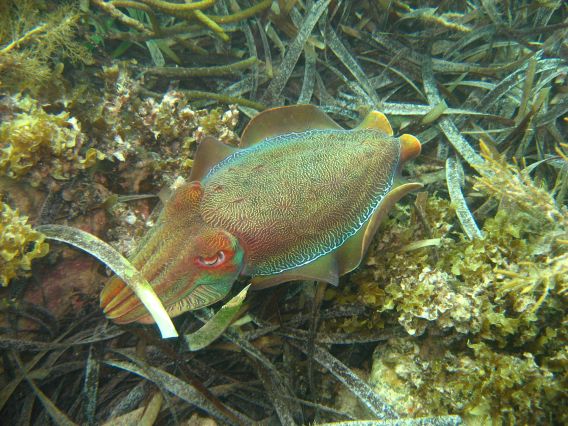
Giant Australian Cuttlefish
Sepia apama
Rocky and coral reefs of southern Australia, down to 100 meters.
Largest cuttlefish species, up to 1 meter total length. Broad flattened body with lateral fins running along the entire mantle.
Identification
Sepia apama is the largest cuttlefish species in the world, reaching a meter in total length and weighing over 10 kg. The body is broad and flattened, with lateral fins extending along the full length of the mantle. Like all cuttlefish, they are masters of color and pattern change, using skin chromatophores to communicate, camouflage, and hunt.
Distribution & Habitat
This species is endemic to the southern Australian coastline, from Brisbane in the east, around the southern coast, to Shark Bay in Western Australia. The northern Spencer Gulf population is the most famous.
Behavior
Every winter — roughly May to August — thousands of giant Australian cuttlefish gather at Point Lowly and Stony Point in upper Spencer Gulf, South Australia, to mate. It is one of the most remarkable cephalopod aggregations on earth. Males compete for mates using dramatic color displays and arm wrestling; smaller males adopt female coloration to sneak past larger rivals and mate covertly.
Where to See Them
The Whyalla aggregation in South Australia (May to August) is unique. Water temperatures are around 13-14 C — a drysuit or thick wetsuit is essential. Edithburgh Jetty is another reliable site for smaller numbers throughout the year.
Southern Australian coastline from Brisbane around to Shark Bay, Western Australia.
Aggregates in tens of thousands at a single site in Spencer Gulf (South Australia) each winter to mate.
Find diving tours where you might encounter this species:
Diving Tours & Activities
Book diving experiences with local operators