 EN
EN
 ES
ES
 DE
DE
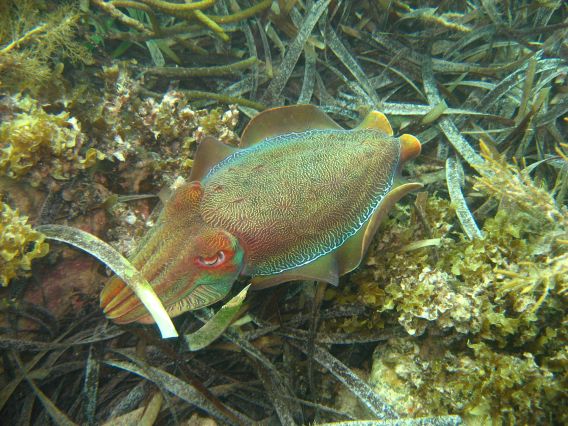
Sepia Gigante Australiana
Sepia apama
Aguas costeras rocosas del sur de Australia, especialmente en el Golfo de Spencer (Australia Meridional).
La jibia más grande del mundo, hasta 50 cm. Piel extremadamente dinámica con cromatóforos que producen patrones de color fascinantes. Ojos en forma de W.
Identification
Sepia apama is the largest cuttlefish species in the world, reaching a meter in total length and weighing over 10 kg. The body is broad and flattened, with lateral fins extending along the full length of the mantle. Like all cuttlefish, they are masters of color and pattern change, using skin chromatophores to communicate, camouflage, and hunt.
Distribution & Habitat
This species is endemic to the southern Australian coastline, from Brisbane in the east, around the southern coast, to Shark Bay in Western Australia. The northern Spencer Gulf population is the most famous.
Behavior
Every winter — roughly May to August — thousands of giant Australian cuttlefish gather at Point Lowly and Stony Point in upper Spencer Gulf, South Australia, to mate. It is one of the most remarkable cephalopod aggregations on earth. Males compete for mates using dramatic color displays and arm wrestling; smaller males adopt female coloration to sneak past larger rivals and mate covertly.
Where to See Them
The Whyalla aggregation in South Australia (May to August) is unique. Water temperatures are around 13-14 C — a drysuit or thick wetsuit is essential. Edithburgh Jetty is another reliable site for smaller numbers throughout the year.
Endémica de Australia del Sur. La mayor concentración de apareamiento del mundo ocurre en Whyalla, Golfo de Spencer.
Macho de aspecto espectacular durante el apareamiento: exhibiciones cromáticas intensas. Se congregan por millones en Whyalla (Australia) entre mayo y agosto.
Encontrá tours de buceo donde podrías encontrar esta especie:
Tours y Actividades de Buceo
Reservá experiencias de buceo con operadores locales