 EN
EN
 ES
ES
 DE
DE
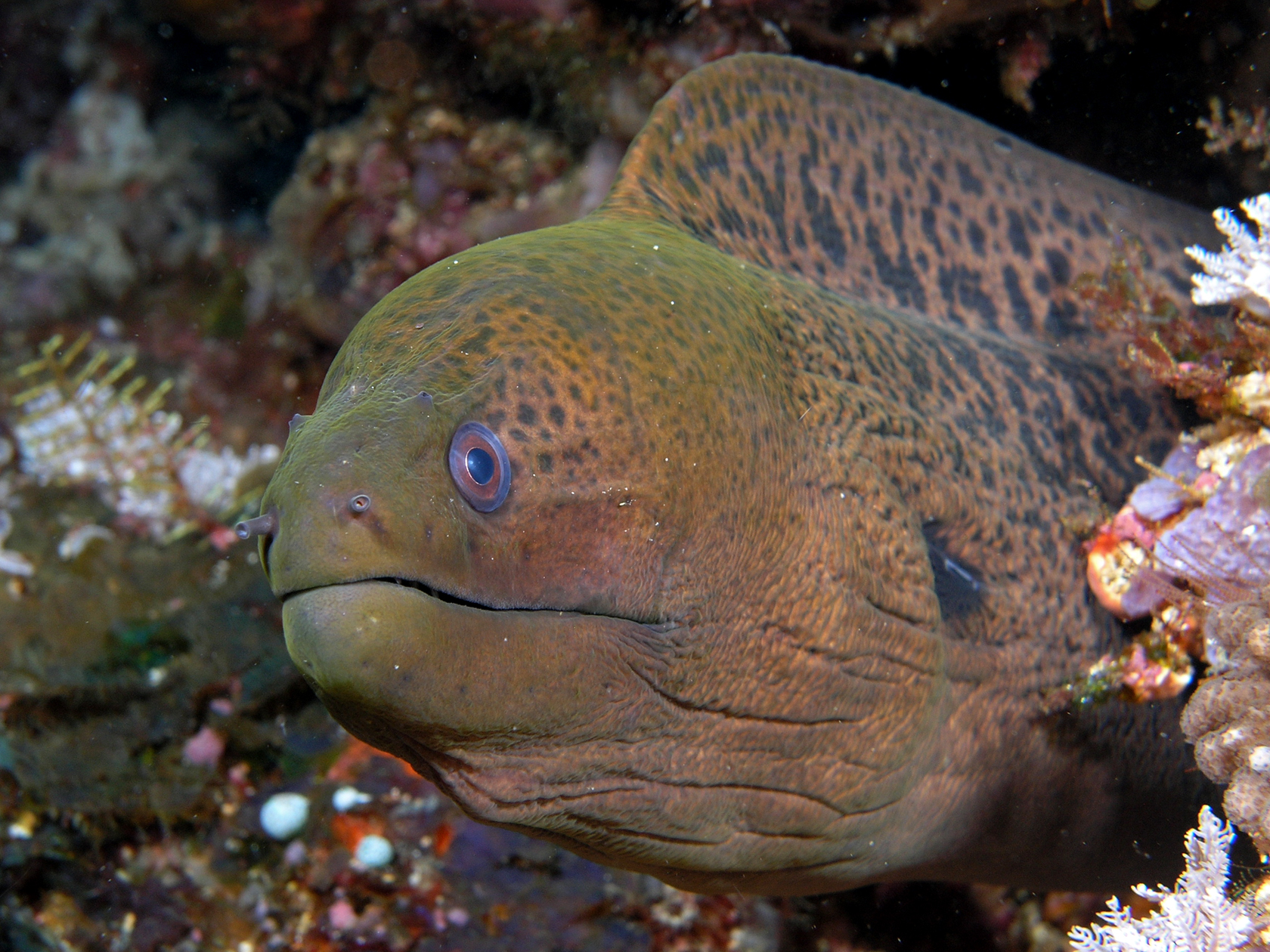
Giant Moray Eel
Gymnothorax javanicus
Coral reefs and rocky crevices in the tropical Indo-Pacific.
Largest moray species. Brownish body with dark leopard-like spots. Heavy jaw with visible teeth, especially in adults over 2 meters.
Identification
Gymnothorax javanicus is the largest moray eel species, reaching 3 meters and over 30 kg. The body is brownish to yellow-brown with a dense pattern of dark leopard-like spots that become smaller and more numerous toward the head. Large adults have impressive jaws lined with visible teeth.
Distribution & Habitat
Giant morays are widely distributed across the Indo-Pacific, from the Red Sea east to French Polynesia, Hawaii, and the Pitcairn Islands. They inhabit reef crevices and coral-rock structures from shallow lagoons to about 50 meters.
Behavior
The constant mouth-opening and closing that looks like threatening behavior is actually respiration — morays need to actively pump water over their gills. They are primarily nocturnal hunters but will emerge during the day when food is available. On some Red Sea and Indonesian reefs, giant morays form hunting partnerships with roving coral groupers: the grouper signals the moray to flush prey from crevices, and both share the kill. This is one of the clearest documented examples of interspecific cooperation in reef fish.
Where to See Them
Reliably seen throughout the Red Sea, Maldives, Indonesia, and French Polynesia. Keep hands and feet away from crevices — while bites are almost never aggressive, they are often serious and become severely infected.
Red Sea to French Polynesia, Hawaii, and the Pitcairn Islands.
Primarily nocturnal. Hunts cooperatively with groupers on some reefs. Constantly opens and closes mouth to force water over gills, not as aggression.
Find diving tours where you might encounter this species:
Diving Tours & Activities
Book diving experiences with local operators