 EN
EN
 ES
ES
 DE
DE
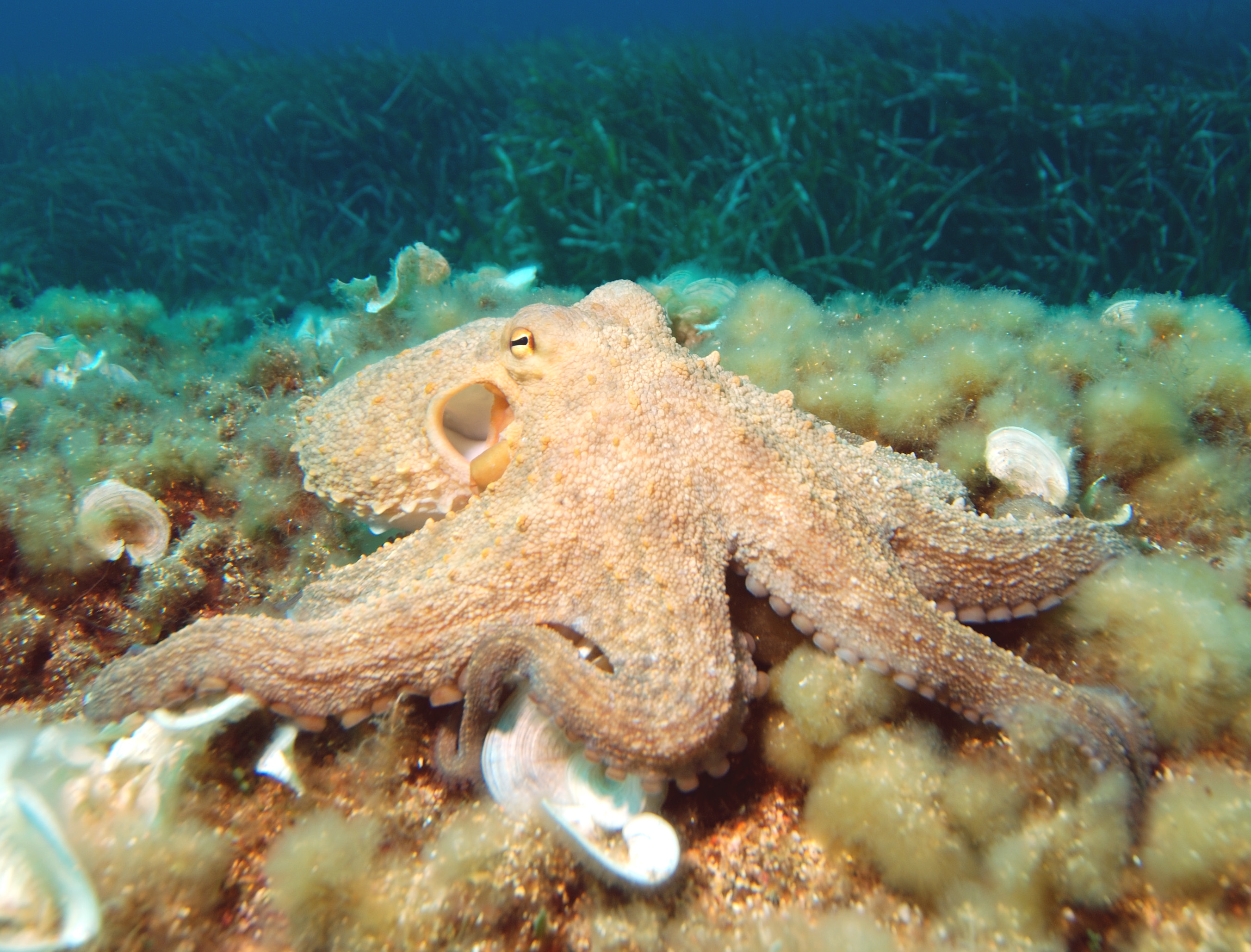
Common Octopus
Octopus vulgaris
Rocky reefs, rubble bottoms, and seagrass from the intertidal to 200 meters.
Bulbous mantle, eight arms, highly variable coloration from mottled brown to brick red. Changes color and texture instantly for camouflage.
Identification
The common octopus is a medium-sized cephalopod with a bulbous mantle, a pair of large sideways eyes, and eight muscular arms lined with two rows of suckers. Body coloration is extraordinarily variable: at rest, mottled brown; when alarmed, chalk white or brick red; when camouflaged, matching any substrate in seconds. Adults reach 1 meter arm-tip to arm-tip.
Distribution & Habitat
Found across the Atlantic and Mediterranean, with related populations in the Pacific (now understood to be separate but historically lumped with Octopus vulgaris). Prefers rocky habitats with plenty of crevices for dens.
Behavior
Octopuses are widely considered the most intelligent invertebrates. They solve mazes, open screw-top jars, recognize individual humans, and use tools. They are almost entirely solitary, coming together only briefly to mate. Females die after their eggs hatch; males typically die within weeks of mating. Lifespan is only 1 to 2 years — which makes their intelligence even more remarkable.
Where to See Them
Night dives in the Mediterranean, the Canary Islands, the Azores, and the Caribbean reliably produce octopus sightings. Look for piles of shells outside likely dens (called a "midden") — a sure sign of occupation. Never pull an octopus from its den for a photo; some dive guides still do this and it is both stressful to the animal and poor practice.
Atlantic, Mediterranean, and parts of the Pacific. The "common" octopus is actually a species complex under review.
Nocturnal and solitary. Intelligent problem-solver. Uses dens made from rocks, shells, or discarded bottles. Short lifespan (1-2 years).
Find diving tours where you might encounter this species:
Diving Tours & Activities
Book diving experiences with local operators