 EN
EN
 ES
ES
 DE
DE
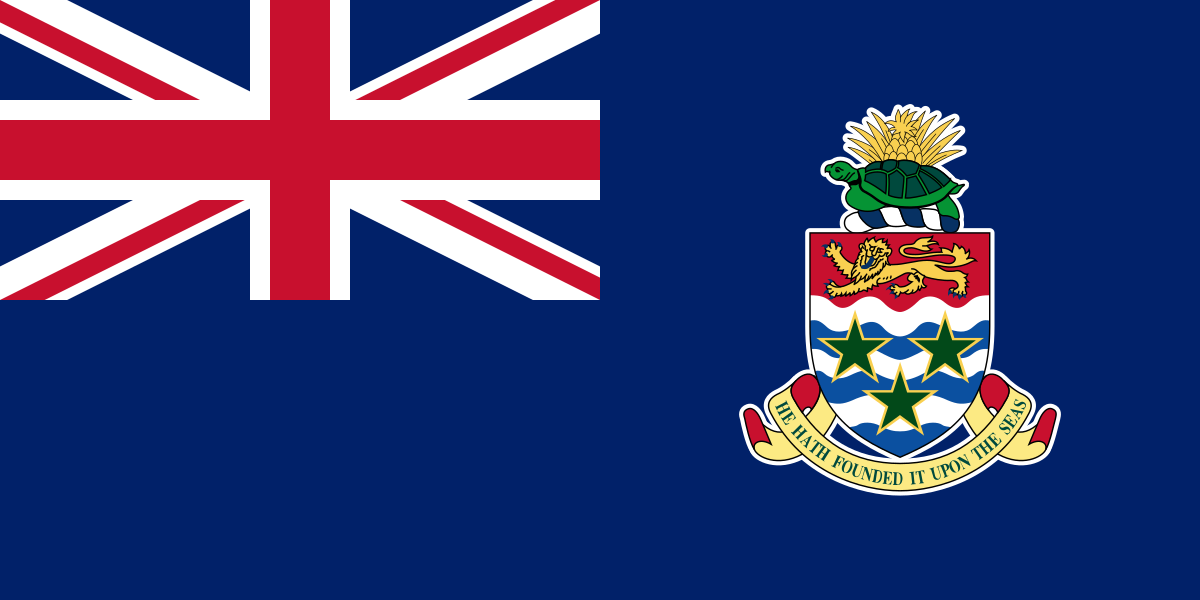
Cayman Islands
Three small islands in the Caribbean, all three of them drenched in diving.
Grand Cayman is the biggest and most developed, and it serves as the entry point for most visitors. The North Wall and Eagle Ray Pass are world-class drop-offs where the reef drops into 2,000 meters of blue. Stingray City — the famous shallow encounter with dozens of southern stingrays — is a bucket-list snorkel or easy shallow dive. And the USS Kittiwake, a deliberately-sunk US Navy submarine rescue ship, is a fully-penetrable wreck dive accessible to Open Water divers.
Little Cayman, with a permanent population under 200, is the quietest of the three and holds the single best dive in the Caymans: Bloody Bay Wall. The wall starts at 6 meters and drops vertical to over 2,000. Sponge-encrusted, tarpon-patrolled, and empty of other divers almost always.
Cayman Brac has the MV Captain Keith Tibbetts, a 330-foot Soviet frigate sunk in 1996, and walls that rival Little Cayman's.
Visibility across the Caymans is legendary — 30 meters is typical, 50 meters not uncommon. The water stays 26–29°C year-round.
The selection.
Search Flights
Bookings through this form support independent dive journalism.
Search Flights & Hotels · Cayman Islands
Compare live prices across hundreds of airlines and accommodations — all in one place.
How to get there.
Flight gateway data · updated daily
Book Your Airport Transfer
Bookings through this widget support independent dive journalism.
Dive sites.
Dive sites map
Delayed, cancelled, or overbooked? You may be entitled to up to €600 per passenger.
Frequently asked questions
Q01
When is the best time to dive in Cayman Islands?
+
When is the best time to dive in Cayman Islands?
The best months for diving in Cayman Islands are April, May, June, July, August, September, October. During this period water conditions, visibility, and marine life activity are typically at their peak.
Q02
What is the water temperature in Cayman Islands?
+
What is the water temperature in Cayman Islands?
Water temperatures in Cayman Islands range from 26°C to 29°C throughout the year. A 3mm wetsuit is generally sufficient during warmer months; consider a 5mm for cooler periods.
Q03
What visibility can I expect diving in Cayman Islands?
+
What visibility can I expect diving in Cayman Islands?
Underwater visibility in Cayman Islands typically ranges from 20 to 40 meters, depending on season and dive site. Optimal visibility is generally achieved during the dry season.
Q04
What are the most famous dive sites in Cayman Islands?
+
What are the most famous dive sites in Cayman Islands?
Some of the most iconic dive sites in Cayman Islands include Bloody Bay Wall, USS Kittiwake, MV Captain Keith Tibbetts. Each offers a distinctive experience — from dramatic walls and wrecks to pelagic encounters and macro photography hotspots.
Q05
Where should I stay when diving in Cayman Islands?
+
Where should I stay when diving in Cayman Islands?
We list curated dive resorts and accommodations near the best dive sites in Cayman Islands. See the Resorts section above for our selected properties, or search Booking.com for a broader range of hotels.
Q06
Do I need a certification to dive in Cayman Islands?
+
Do I need a certification to dive in Cayman Islands?
Most dive operators in Cayman Islands require at least an Open Water certification (PADI, SSI, or equivalent). Advanced sites may require Advanced Open Water or specific experience levels. Discover Scuba Diving experiences are often available for beginners.
Liveaboards & Dive Packages
Live aboard a vessel and dive multiple times daily — the purest form of scuba travel. These platforms specialise in booking dive liveaboards and resort packages.
Where to Stay
Find accommodation near the best dive sites
Top Things to Do
Bookings through this widget support independent dive journalism.
Diving Tours & Activities
Book diving experiences with local operators
Also search on
Search flights on Kiwi.com →